
Strata Renovation Timelines: How Long Is Too Long?

So, your kitchen reno was supposed to be wrapped up in two weeks. Fast forward two months and there’s still dust in the hallway, a skip bin hogging the visitor car park, and the neighbours giving you that look in the lift.
We’ve all heard the horror stories the bathroom refit that turned into a full plumbing overhaul, the “quiet” painting job that somehow needed a jackhammer. In strata living, long or noisy renovations can push even the friendliest neighbour relationships to the brink.
Let’s talk about what’s reasonable, what committees can actually regulate, and how to avoid becoming the person everyone’s whispering about in the lobby.
Why timelines matter (more than you think)
You’re not renovating in a bubble. In apartments, noise, dust, and tradie traffic don’t just stay behind your front door. Much of the time renovations affect common property.
Scope creep is real. That “quick update” can snowball faster than you can say kitchen island.
It’s a legal thing too. Across Australia, owners have a duty not to unreasonably interfere with others’ quiet enjoyment of their homes. Dragging things out? Yep, that can be nuisance.
What committees can (reasonably) control?
Most buildings can set renovation rules through by-laws (or rules if you’re in Victoria/ACT) and approval conditions. These can even extend to requiring a bond.
Fair game for regulation includes:
Clear timelines with a bit of buffer, but not “whenever it’s done.”
Working hours usually matching council rules (think: weekdays only, no early morning drilling).
Noise and dust management acoustic mats, door seals, dust extraction, clean up the common areas daily.
Lift and common area use bookings, protection, no storing your fridge in the lobby.
Waste removal skips where allowed, nothing dumped in the garden. Communal bins are for garbage, not builders waste.
Insurance & licences contractors need to be legit and covered.
Communication ensure you tell your neighbours when you’re starting, how long you’ll be, and who to call if there’s a problem.
What’s not reasonable? Arbitrary bans (“no renos longer than 3 days ever”) or rules that contradict council approvals or legislation.

How long is “too long”?
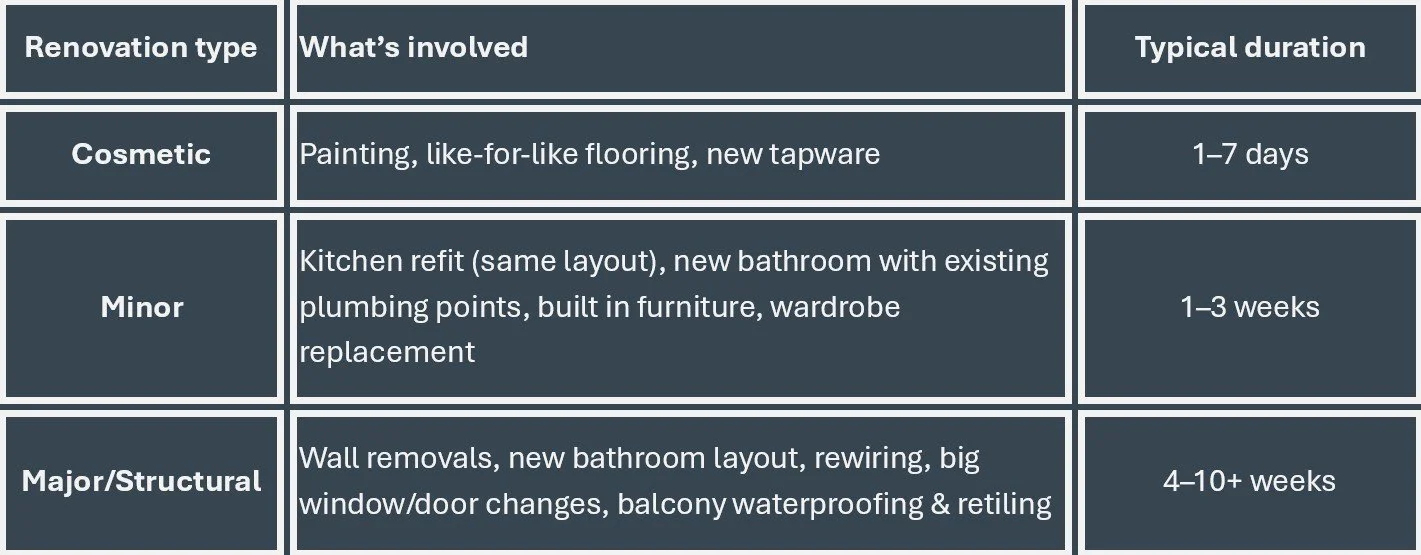
Here’s a rough guide to typical timelines for the different types of works (assuming you’re organised, and your tradies turn up when they say they will):
Tips for avoiding the dreaded “reno from hell” reputation
Order first, demolish later. Waiting on tiles while the bathroom sits gutted is a recipe for tension.
Book the lift early. It’s amazing how often delays come down to no lift access.
Stage your jobs. Two bathrooms? Do one at a time.
Keep neighbours in the loop. A quick “Sorry for the noise, should be done by Friday” note goes a long way.
Ask for extensions early. Give a reason, a new date, and what you’ll do to minimise the impact.
Bottom line
If your “quick” reno is still going weeks beyond what’s typical, with no good reason, then it’s probably too long. Renovations in strata aren’t just about the end result they’re about how you get there, and how well you keep the peace along the way. Plan well, stick to your dates, communicate well, and you’ll finish your project without also building a reputation you don’t want.

Quick Reno checklist
Written approvals and by-laws/rules conditions in hand
Program with start/finish dates + a 20% contingency
Lift/loading dock bookings confirmed
Long-lead time, items ordered before demolition
Neighbour notices delivered (with a mobile number)
Rubbish and debris removal plan
Dust/noise controls organised; daily clean agreed and a final major clean at the end
Insurance certificates and licences collected
Friday progress updates to the strata manager/committee/building manager
Extension requests before the deadline if needed are best!
Share this article:


Disclaimer:
This article is intended for general educational purposes only and does not constitute legal or financial advice. Readers should seek independent legal and professional guidance relevant to their specific circumstances and jurisdiction