
What is Community Title?
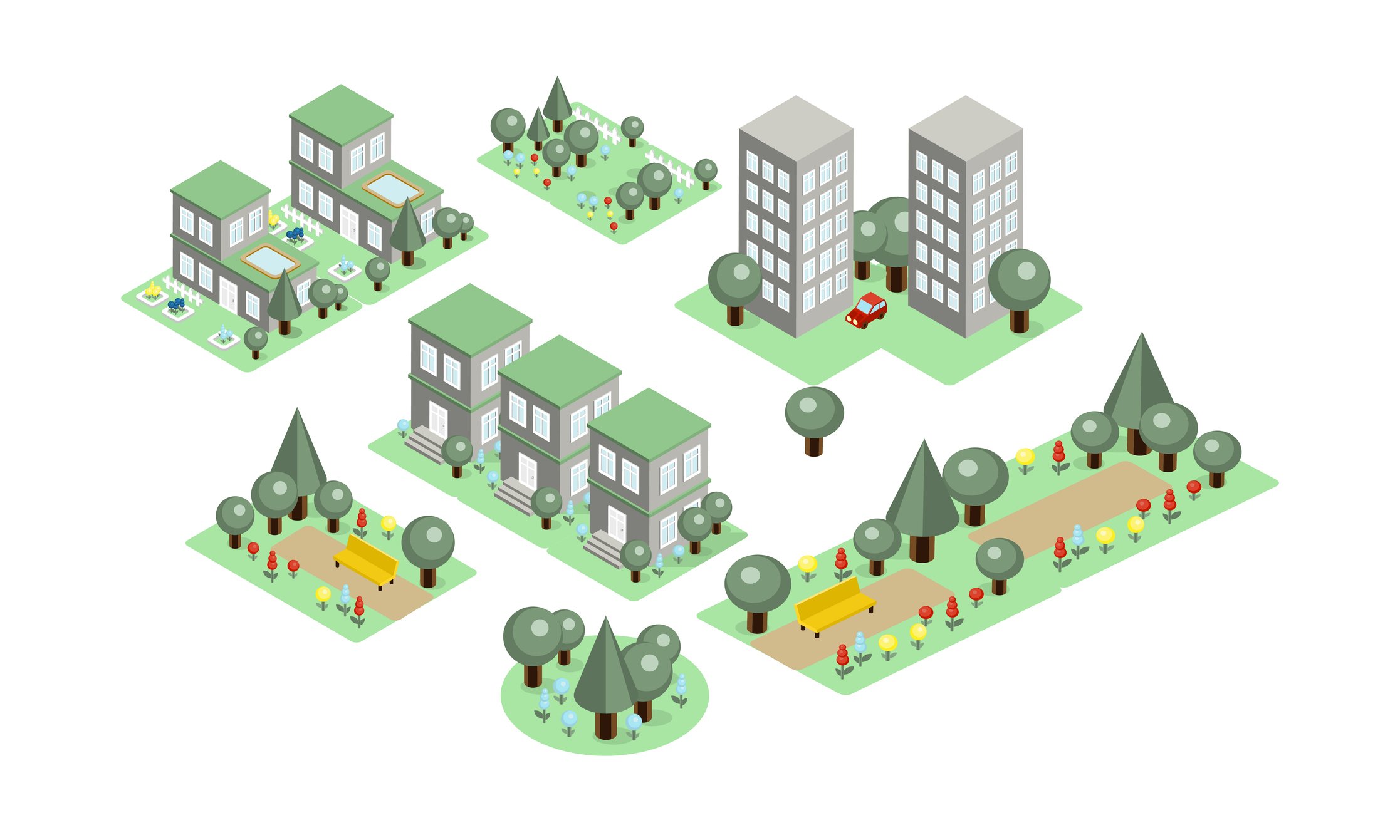
Community title is a form of property ownership that is increasingly common in Australia, particularly in large residential estates and mixed-use developments. While it shares some similarities with strata title, community title is a distinct legal structure with its own set of rules, responsibilities, and governance models.
If you're buying into a new development or simply want to better understand property ownership in modern communities, this article will help clarify what community title is, and how it differs from the more familiar strata title.
What is Community Title?
Community title is a form of land division that allows individual ownership of lots (such as houses, townhouses, or apartments) combined with shared ownership of common property through a legally constituted community association.
In a community title scheme:
Each lot owner holds title to their private property.
The community association owns and manages shared facilities and infrastructure, such as roads, gardens, recreational areas, driveways, private parks, and community centres.
A set of by-laws governs how the common property is used and how owners must behave within the community.
Community title schemes are often used in large estates or developments with extensive shared infrastructure places where individual land ownership coexists with a strong sense of shared responsibility.

Key Features of Community Title Schemes
Community Association
Similar to an owners corporation in a strata scheme, the community association is a legal entity that manages the community property and enforces the by-laws. Every lot owner is automatically a member and contributes financially through levies.
Tiered Subdivision Structure
Community title developments can include multiple layers or subsidiary schemes. For example, within a larger community title scheme, there might be smaller strata or neighbourhood schemes that manage their own buildings or sections of the estate. These “layered” schemes still contribute to and are governed by the overarching community association.
Common Property Management
The community association is responsible for maintaining and insuring common property.
This could include:
Private roads
Walking paths
Recreational facilities (like tennis courts, clubhouses, pools, or gyms)
Entry signage and lighting
Community halls
By-laws and Community Rules
Just like in strata schemes, community schemes operate under a set of by-laws or rules, if you live in NSW these are usually included in a Community Management Statement (CMS). Much like in strata schemes, the CMS can regulate things like noise, parking, rubbish disposal, and the appearance of buildings (to maintain a consistent look throughout the estate).
How Community Title Differs from Strata Title
Although community and strata schemes have shared elements like collective ownership and shared rules there are important distinctions between the two:
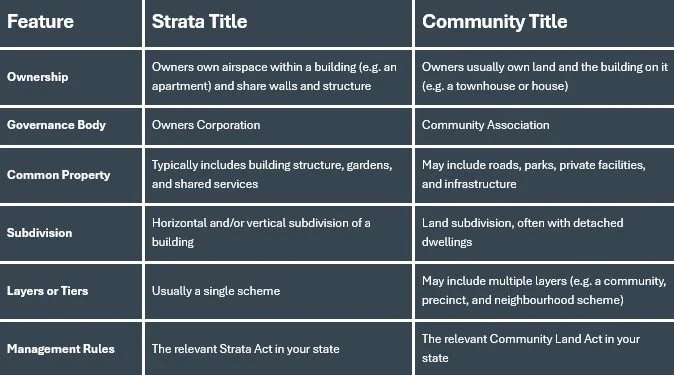
Why Developers Use Community Title
Community title is popular in large or staged developments where there is significant shared infrastructure. Developers might choose a community scheme if:
The estate includes private roads, playgrounds, or clubhouses not handed over to council
They want to maintain design consistency through architectural controls
The development will occur in multiple stages or include a mix of townhouses, villas, and apartments

Responsibilities of Community Title Owners
Living in a community title development involves both benefits and obligations.
As an owner, you must:
Pay levies to the community association
Follow community by-laws
Participate in meetings (or at least stay informed)
Maintain your individual lot (building and land)
Obtain approvals for external changes to your property (e.g. fences, paint colours, extensions)
In return, you gain access to well-maintained communal spaces, a cohesive neighbourhood environment, and often a stronger sense of security and community identity.
What about the….
Advantages?
Enhanced lifestyle with access to shared amenities
Greater control over the community’s appearance and rules
Lower local council involvement in infrastructure management
Challenges?
More complex governance, especially in tiered schemes
Decision-making may take longer due to multiple stakeholders
Ongoing levy costs and responsibilities
Final Thoughts
Community title offers a modern and flexible approach to land ownership that supports both individual freedom and collective responsibility. It’s particularly well-suited to today’s lifestyle estates, where residents expect more than just a standalone property, they want integrated, shared spaces that enhance the living experience.
If you're considering buying into a community title scheme, make sure you understand:
The specific by-laws that apply
Your financial obligations
How the scheme is structured and governed
While community title is not the same as strata title, both models aim to support harmonious, well-maintained, and cooperative living environments. Knowing the differences will help you make an informed decision and be a better neighbour in your shared community.
Disclaimer:
This article is intended for general educational purposes only and does not constitute legal or financial advice. Readers should seek independent legal and professional guidance relevant to their specific circumstances and jurisdiction